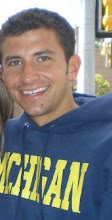
To all my friends back home:
I'm now all settled in my apartment in Huanchaco, Peru, a beach town on Peru's northern coast. With temperatures around 78º in late February and early March and lots of sun, Huanchaco should work pretty well for a spring break destination (pictures on facebook). I know the flights down here are a bit more expensive than other spring break destinations, but once making it down, expenses would be pretty low as you would have a free place to stay and a good filling 2 course meal costs about $2.
Anyway, the offer is on the table for all of you. I hope to see you this spring!
Until next time, keep livin' the dream!
Monday, November 30, 2009


I'll be home for Christmas!!!
My flight is booked and bags are packed. I'm coming back state side for Christmas! I'll be flying in late on Sunday the 20th and not returning to Peru until the 10th or 15th ish of January. If any of you reading the blog are going to be around the Detroit area let me know, I'd love to meet up while I'm back!
Until next time, keep livin' the dream!
Until next time, keep livin' the dream!
A botched job
So I went for a haircut yesterday. It seemed like a pretty normal Peruvian barber shop, a little bit shady looking with dingy yellow lighting inside, chairs from the 1960s with cracking vinyl, and crusted mirrors. The barber a 65 year old looking Peruvian man with well kept hair looked good enough though, so I entered. That was my big mistake! First, pulled out these:

It took me a little while to realize what they were, a pair of manual hair trimmers. We're all used to electronic hair trimmers. These function in the same way as the electric ones, but have scissor like handles to move the blades making them cut. I actually thought it was pretty cool that he was still using these tools from the 1950s so I stayed. Next, he pulled out his scissors, a bit rusty with a blade that you could feel was not cutting all the hairs when he pinched the blades together.

With this I was getting a little bit nervous that my haircut would not turn out the way it normally does. Unfortunately I was right. The 65ish year old man apparently could not see very well because some sections of my head he skipped cutting completely and I had to tell him that he missed the spots. The worst part was the part cut a little bit too short on the back of my head. Needless to say I was not happy! He then pulled out his last antiquated instrument, a straight blade razor to shave the back of my neck.

After a quick shave I was spotted and on my way...to my next barber shop. There they did a much better job, but unfortunately had to shave me nearly bald because of my first cut. Lesson learned, don't go into shady looking barber shops to have your hair cut by nearly blind old men who used rusty scissors. Let that be a lesson to all of you! At least I only paid a dollar twenty for the cut!
Until next time, keep livin' the dream!
It took me a little while to realize what they were, a pair of manual hair trimmers. We're all used to electronic hair trimmers. These function in the same way as the electric ones, but have scissor like handles to move the blades making them cut. I actually thought it was pretty cool that he was still using these tools from the 1950s so I stayed. Next, he pulled out his scissors, a bit rusty with a blade that you could feel was not cutting all the hairs when he pinched the blades together.
With this I was getting a little bit nervous that my haircut would not turn out the way it normally does. Unfortunately I was right. The 65ish year old man apparently could not see very well because some sections of my head he skipped cutting completely and I had to tell him that he missed the spots. The worst part was the part cut a little bit too short on the back of my head. Needless to say I was not happy! He then pulled out his last antiquated instrument, a straight blade razor to shave the back of my neck.
After a quick shave I was spotted and on my way...to my next barber shop. There they did a much better job, but unfortunately had to shave me nearly bald because of my first cut. Lesson learned, don't go into shady looking barber shops to have your hair cut by nearly blind old men who used rusty scissors. Let that be a lesson to all of you! At least I only paid a dollar twenty for the cut!
Until next time, keep livin' the dream!
The search for a new home
My parents were on their way home and it was time for me to start the next leg of my adventure on the north coast of Peru. My trip itinerary before leaving the states was to spend 4 months volunteering in the mountains, 4 months on the coast, and then 4 more in the jungle working on projects in the fields of sustainable development, microfinance, and rainforest conservation. After spending 4 months in Cusco working on my stove project and one month traveling with my parents, I am now left with 7 months in my trip. I plan to stay on Peru's northern coast until March working in microfinance (and surfing) and then traveling to the jungle city of Iquitos to finish up my time before coming home in June. My plans for the jungle have now changed a little bit as I now plan to continue my stove project and potentially add a new element installing biosand water filters in rural homes. As many people don't know to boil their virus and bacteria infested water, or don't bother to do so, it is a major health concern in rural villages. Water filters would provide villagers a simple way to clean their water keeping them healthy.
My time over the last few weeks has been devoted to scouting cities on the northern coast in which I wanted to live, talking with volunteer organizations working in microfinance, looking for a new place to live, and getting settled in my new home. In my search I spent about 2 weeks in 4 different cities trying to get a sense of what life was like. I checked out Chimbote, Trujillo, Chiclayo, and Mancora. You can click here to see a map of these 4 cities. In the end, I decided to live in Huanchaco which is a small beach town just outside of Trujillo. Here is a map of my new apartment. Chimbote was scratched from my list of potential places to live because of the constant smell of fish in the air from the processing plants there. Chiclayo seemed to have a very fast paced life as well as a coastline that was filled with dilapidated buildings. Mancora was absolutely beautiful, but as it was a very small town filled with tourist I could see myself getting sucked into the gringo life there and not spending my time with Peruvians. As one of my main goals here is to master Spanish and learn a bit about the culture, Mancora didn't seem like such a good fit.
Where I'm now living, Huanchaco, is a small little beach town of about 8,000 people that is sunny and 75º all the time and is very well maintained and has beautiful beaches that fill up on the weekends. It's also about 20 minutes from the city of Trujillo (pop 700,000) which has everything that I could want in a big city. It even has a movie theater, which is an upgrade from Cusco! I'm finally starting to feel a bit settled here, but am still searching for work, and friends :( I think I now have a couple of leads on both though, so hopefully things will start getting more exciting soon.
Until next time, keep livin' the dream!


 Huanchaco Pier
 The beach
 Downtown Trujillo
My time over the last few weeks has been devoted to scouting cities on the northern coast in which I wanted to live, talking with volunteer organizations working in microfinance, looking for a new place to live, and getting settled in my new home. In my search I spent about 2 weeks in 4 different cities trying to get a sense of what life was like. I checked out Chimbote, Trujillo, Chiclayo, and Mancora. You can click here to see a map of these 4 cities. In the end, I decided to live in Huanchaco which is a small beach town just outside of Trujillo. Here is a map of my new apartment. Chimbote was scratched from my list of potential places to live because of the constant smell of fish in the air from the processing plants there. Chiclayo seemed to have a very fast paced life as well as a coastline that was filled with dilapidated buildings. Mancora was absolutely beautiful, but as it was a very small town filled with tourist I could see myself getting sucked into the gringo life there and not spending my time with Peruvians. As one of my main goals here is to master Spanish and learn a bit about the culture, Mancora didn't seem like such a good fit.
Where I'm now living, Huanchaco, is a small little beach town of about 8,000 people that is sunny and 75º all the time and is very well maintained and has beautiful beaches that fill up on the weekends. It's also about 20 minutes from the city of Trujillo (pop 700,000) which has everything that I could want in a big city. It even has a movie theater, which is an upgrade from Cusco! I'm finally starting to feel a bit settled here, but am still searching for work, and friends :( I think I now have a couple of leads on both though, so hopefully things will start getting more exciting soon.
Until next time, keep livin' the dream!
The new Apt.
The 2nd oldest church in the americas (and the view from my bedroom window)
 Huanchaco PierThe beach
 Downtown Trujillo
Thursday, November 26, 2009
WooHoo, a visit from La Familia
After leaving my host family in Cusco, I traveled with my real family to Machu Picchu. To get there we took a bus from Cusco about 6 hours to get to a very remote village in order to start our hike...or horseback riding trek to even more remote villages. For my family, this was the first time they had traveled to such a remote village. I really enjoyed seeing their reaction to some things that I had amazingly grown accustom to. For example they did not think it was normal to see llamas and alpaca crossing roads, or normal to eat guinea pig, or sleep on alpaca hides, or see people walking around in ponchos speaking in quechua. Looking back I remember how new and exciting these things were to me just four months ago, but after time it somehow became just normal life for me. Seeing the reaction of my family to these new things really made me take a step back to realize yet again just how different these things were.
I have a few pictures from our trip to these rural villages, but unfortunately I lost the flash drive on which I stored my pictures of Machu Picchu and my mom’s pictures...sorry mom!
 Rural village on our trip
 Looks like songs around the camp fire are pretty popular all over

 Trekking on horseback
 While on the dunes I also got a chance to try sand boarding which was surprisingly similar to snowboarding, except you get covered in sand and it's not so cold. Riding was a bit slower than snow boarding and I also found it cool that you can actually feel a difference in board performance from the top of a dune to the bottom as the wax is rubbed from the board by the sand.
 After this side trip it was off to Las Islas Ballastas or the poor mans Galapagos. In the end, it was quite a far stretch to be called the poor mans Galapagos, but it was still pretty cool to see the spot with the highest bird concentration in the world and wild penguins! The only downside to all the birds...all the bird poop. On our 2 hour trip I think I got pooped on 4 times. My mom and dad, 0. Lucky me!


I have a few pictures from our trip to these rural villages, but unfortunately I lost the flash drive on which I stored my pictures of Machu Picchu and my mom’s pictures...sorry mom!
Rural village on our trip Looks like songs around the camp fire are pretty popular all over
 Trekking on horseback
In a month's time we really covered quite a bit of Peru. It will be hard to tell about everything, but I'll do my best to hit the highlights. After spending a bit of time with my host family and seeing Machu Picchu it was off to Puno and Lake Titicaca, the world’s highest navigable lake. One day there and then Kim's short trip was over and I was headed toward the coast with my mom and dad. On our way we stopped in Ica to check out the sand dunes. I was really surprised by the enormity of the dunes. If I were dropped off there not knowing where I was and a camel was added to the scene I would have really thought I were somewhere in Africa. While visiting the dunes we of course went on a dune buggy ride which was more exciting than I could have asked for. I absolutely love adrenaline rushes. Cedar Point is one of my favorite vacation spots. I have to admit though I was a little nervous the way we were flying over the tops of sand dunes. It was a little too much for my mom as she lost her lunch about half way through our trip.
 While on the dunes I also got a chance to try sand boarding which was surprisingly similar to snowboarding, except you get covered in sand and it's not so cold. Riding was a bit slower than snow boarding and I also found it cool that you can actually feel a difference in board performance from the top of a dune to the bottom as the wax is rubbed from the board by the sand.
 After this side trip it was off to Las Islas Ballastas or the poor mans Galapagos. In the end, it was quite a far stretch to be called the poor mans Galapagos, but it was still pretty cool to see the spot with the highest bird concentration in the world and wild penguins! The only downside to all the birds...all the bird poop. On our 2 hour trip I think I got pooped on 4 times. My mom and dad, 0. Lucky me!
Penguins!
Birds...lots of birds
On the back side of our trip we had a really nice time visiting Lima, Peru's capital with Jaime Gomez, the dad of one of my friends back home and making our way to the jungle with him. The best part of that trip was probably the native village that we toured. It was a little bit touristy, but none the less, still pretty cool to get a glimpse of how some people still live in the Jungle today.

My mom passing out Jelly Bellys to kids in the jungle village
Our final destination was Trujillo and Huanchaco, the town in which I am currently living. There we got a chance to visit the family of another friend from the states and finally relax on the beach.

Just as fast as my parents arrived, they were gone again.
Until next time, keep livin' the dream!
Wednesday, November 25, 2009
Time to go...
The 6th of October ended my stay in Cusco. My last days and weeks there were filled with highs and lows. Finishing up my stove project kept me busier then I ever I expected I would be before coming to Peru, but then again, it was also a more fulfilling experience than I expected to get while here. I had the excitement of seeing my parents and sister again for the first time in over 4 months and then the pain to say goodbye to my host family who I had grown so close to over my time there.
The days leading up to the day my family arrived to Cusco were very anxious. The mood in my house was relatively happy as usual, but the fact that I was leaving in a few days seemed to be on everyone’s' mind. After spending 4 months with my 8 member host family, I have to admit that I became pretty attached to them. I truly could not have a better host family. Throughout my stay they were incredibly warm and inviting in all aspects of their lives. I came into their home as a stranger, but felt I left as a member of the family. It was especially touching for me when Juseph, the 10 year old cousin living in the house, gave me his favorite hot wheels car so I would always remember him.
On the 6th, I met my family at the airport and the sadness of saying goodbye turned to happiness of being with my family again and excitement to begin a month long trip around Peru with my parents. While in Cusco a good part of my time was spent translating between English and Spanish and my ¨two families.¨ We had a lot of laughs, most of which at my expense :-/ All the stories from my childhood that I had tried to forget along with the recent language mess ups and other embarrassing stories from my stay in Cusco came out and had everyone laughing. After getting to know the city for a few days, it was finally time for me to go and start on my next adventure with my parents. The first destination of our trip was to Machu Picchu. More on that in my next post.
Until next time, keep livin' the dream!
The days leading up to the day my family arrived to Cusco were very anxious. The mood in my house was relatively happy as usual, but the fact that I was leaving in a few days seemed to be on everyone’s' mind. After spending 4 months with my 8 member host family, I have to admit that I became pretty attached to them. I truly could not have a better host family. Throughout my stay they were incredibly warm and inviting in all aspects of their lives. I came into their home as a stranger, but felt I left as a member of the family. It was especially touching for me when Juseph, the 10 year old cousin living in the house, gave me his favorite hot wheels car so I would always remember him.
On the 6th, I met my family at the airport and the sadness of saying goodbye turned to happiness of being with my family again and excitement to begin a month long trip around Peru with my parents. While in Cusco a good part of my time was spent translating between English and Spanish and my ¨two families.¨ We had a lot of laughs, most of which at my expense :-/ All the stories from my childhood that I had tried to forget along with the recent language mess ups and other embarrassing stories from my stay in Cusco came out and had everyone laughing. After getting to know the city for a few days, it was finally time for me to go and start on my next adventure with my parents. The first destination of our trip was to Machu Picchu. More on that in my next post.
Until next time, keep livin' the dream!
Difficulty in the bathroom, bedroom, and trouble at work
My last few weeks in Cusco were filled with difficulty and excitement. The seasons were changing from winter (The dry season which is warm during the day with overnight lows around freezing) to spring and summer (Which are warmer seasons, but also a lot wetter). Along with these changes of the seasons came some unexpected problems for me. The first of which was the challenge of going to the bathroom...not physically going to the bathroom, but actually going, or getting to, the bathroom. The house I lived in while in Cusco was a little different from those in the states in that none of the rooms were actually connected to each other. To get from one room to another it was necessary first to go to the central courtyard and then to the next room. Because of this and the changing seasons it was a bit difficult making it to the bathroom. In my last few weeks there, the rainy season was starting and when it rained, it poured. That meant for me in order to go from my bedroom to the bathroom I had to use an umbrella! Oh how I miss the USA! With the food and water standards not quite being up to par in Peru, this made for some interesting sprints from my room with an umbrella to the bathroom while trying not to slip down the outdoor metal staircase...I'll spare the rest of the details on that story!
In addition to my problems in the bathroom, I was also having some trouble in the bedroom. In September not only was it raining more, but temperatures were also going up, which meant it was not getting down to freezing at night. At first this doesn't seem like such a problem, but then when realizing that that's when bugs start to flourish again, it becomes more of a problem. Not only do flies, butterflies, and ants flourish in higher temperatures, but also bedbugs...which I recently learned are not only a problem of our grandparents’ generation. About 3 weeks before I left Cusco I noticed some weird bite marks showing up all over my body. They were kind of like mosquito bites, but a little bit bigger and a little bit itchier. I dismissed the marks at first, but when they continued for about a week and a half I finally asked my host mother what they were. She informed me that I had probably brought bed bugs with me in my pants from the floors of the rural villages I was working in. Apparently they are most commonly found in warm areas of rural houses, like near the kitchen stove. Awesome! Thankfully that was nearly the end of my problem. After leaving ALL of my clothes, sheets, and mattress hanging out in the sun for a few days the bedbugs naturally left all my stuff! Three weeks later all the bite marks had disappeared and I was back to normal.
In my last week of working in the rural village of Puma Marka I also witnessed a fight. I was walking between houses while installing stoves when I heard some screaming. I looked up the hillside when I saw a man hitting his wife in the face and head, beating her for I don't know what reason. Unfortunately in the rural villages here domestic violence, women's rights, and alcohol abuse are big problems. As the women of a household here usually don't have any income, their status in the house is lowered and are quite frequently disrespected. Seeing this fight, or beating to be correct, was a first for me. As this man and woman came down the hill toward me, I started running toward them in order to help the woman. To my surprise, however, the man was also carrying a knife with him in his left hand. I assume it was probably unrelated to the fight and he was probably using it for his work just before the fight took place, either way though, although he was not a really big guy, I found myself a little slow to get near the knife. Thankfully, only seconds more passed before help from neighbors arrived, pulling the man from his wife, saving her from more abuse.
For me the whole situation was a very surreal experience and very eye opening to how frightening something like that is in real life. We see so many similar images on TV that we become almost numb to it. The reality of the situation for me however was very frightening and made me become aware of how real some of the problems seen on TV really are. I hope that will be the last time I ever have to witness something like that.
Until next time, I hope at least you all are livin' the dream!
In addition to my problems in the bathroom, I was also having some trouble in the bedroom. In September not only was it raining more, but temperatures were also going up, which meant it was not getting down to freezing at night. At first this doesn't seem like such a problem, but then when realizing that that's when bugs start to flourish again, it becomes more of a problem. Not only do flies, butterflies, and ants flourish in higher temperatures, but also bedbugs...which I recently learned are not only a problem of our grandparents’ generation. About 3 weeks before I left Cusco I noticed some weird bite marks showing up all over my body. They were kind of like mosquito bites, but a little bit bigger and a little bit itchier. I dismissed the marks at first, but when they continued for about a week and a half I finally asked my host mother what they were. She informed me that I had probably brought bed bugs with me in my pants from the floors of the rural villages I was working in. Apparently they are most commonly found in warm areas of rural houses, like near the kitchen stove. Awesome! Thankfully that was nearly the end of my problem. After leaving ALL of my clothes, sheets, and mattress hanging out in the sun for a few days the bedbugs naturally left all my stuff! Three weeks later all the bite marks had disappeared and I was back to normal.
In my last week of working in the rural village of Puma Marka I also witnessed a fight. I was walking between houses while installing stoves when I heard some screaming. I looked up the hillside when I saw a man hitting his wife in the face and head, beating her for I don't know what reason. Unfortunately in the rural villages here domestic violence, women's rights, and alcohol abuse are big problems. As the women of a household here usually don't have any income, their status in the house is lowered and are quite frequently disrespected. Seeing this fight, or beating to be correct, was a first for me. As this man and woman came down the hill toward me, I started running toward them in order to help the woman. To my surprise, however, the man was also carrying a knife with him in his left hand. I assume it was probably unrelated to the fight and he was probably using it for his work just before the fight took place, either way though, although he was not a really big guy, I found myself a little slow to get near the knife. Thankfully, only seconds more passed before help from neighbors arrived, pulling the man from his wife, saving her from more abuse.
For me the whole situation was a very surreal experience and very eye opening to how frightening something like that is in real life. We see so many similar images on TV that we become almost numb to it. The reality of the situation for me however was very frightening and made me become aware of how real some of the problems seen on TV really are. I hope that will be the last time I ever have to witness something like that.
Until next time, I hope at least you all are livin' the dream!
Tuesday, November 24, 2009
Volunteer Work Part 2 (Success)
I continued installing these stoves for a few weeks and was fairly happy while doing so. Seeing how appreciative the recipients were when receiving theirs stoves really made me feel good about the work I was doing. Many of the people I was working for would invite me for lunch, sharing the little food that they had. One family even made me a bracelet as a remembrance. Even more impressive was how kind the people were to me while riding to the village by taxi.

A family with their new stove
Every time I went up to the village I took a bus from my house about 5 minutes, followed by a taxi ride with the villagers up to the village. I found this to be the most economic way to the village as the bus was about 20 cents US and the shared taxi 30 cents US. As a way to reduce transportation cost to and from a village it was common for the villagers to pack taxis as full as possible so they would only need to pay 1 Peruvian New Sol (30 cents US) to get to and from the village. It was not uncommon for me to ride to the village in the taxi shown below packed with 14 adults! I even went in the taxi with 20 school children one time. It was incredible how they packed people into the cab. It really looked like a clown car with people continually piling out. The people I was riding with, however, I found to be incredibly kind. Whenever I went to or from the village with them I was truly treated like a king. I was always given the passenger seat as thanks for the work I was doing while others piled 5 in the back seat, 7 in the trunk area, and even 2 in the driver’s seat! I felt bad riding so comfortably while everyone else squeezed in, but they insisted that I was comfortable.

The taxi often packed with 14 people
Now I was installing stoves, but did not feel I was leaving quite the impact I wanted. After finishing the installation my 30 or so stoves the recipients would use them for some time, but as they were made from ceramic, they would eventually degrade and the people would once again go back to their original ways of cooking in smoke filled homes. I did not feel this was a sustainable solution to the indoor smoke pollution problem here. Because I had done so much research early in my time here and with my new knowledge that I could obtain clay in the region of the village, I decided to construct my own stove prototype. It would be one that would be cheaper than the $17 USD stove that I was installing now and one that would be more sustainable in that the villagers themselves could construct and maintain the stoves.
After some preliminary sketch work and many calculations from my research, I designed a new stove using only clay, sand, mud, straw, a piece of re-rod, and one aluminum roofing sheet, all materials available locally to villagers. What is even better is the new design costs only about $7 USD, less than half the cost of the original stove design I was installing. In addition the new stove consumes about half the wood villagers previously used and still eliminates smoke from villagers’ houses.

Preparing mud mortar for the stove

Stove Platform

In construction

In construction
 Finished Stove
Now, I finally feel satisfied leaving a sustainable project in the village in which I was working. In addition, I also created a detailed step by step process to construct the stove which I passed on to 3 different volunteer organizations who will be continuing my work in the Cusco and Sacred Valley area. I’m happy to say that one of the organizations has already implemented my design in 2 more rural communities. I estimate these to be the benefits, based on some tests I performed and based on tests of similar style stoves:
Over 90% reduction of smoke and carbon monoxide in the home
- 10-15 years of added life for every person in the household
- 12% increase in lung capacity after three months
- Reduction of burn incidence of small children
- Reduction in eye maladies
- Reduction of respiratory illnesses
20-60% reduction of firewood consumption
- Conservation of the environment as less firewood and therefore less trees are consumed
- Reduction in time spent collecting firewood (currently 3-4 mornings per week) and a subsequent increase in time spent in other ways raising family income
After a bit of a slow start, I finally feel good about leaving my work in Cusco behind.
Until next time, keep livin’ the dream!
Volunteer Work Part 1 (Frustration and a thread of hope)
After a long time off, it’s time for some long overdue blog posts!
As I mentioned a number of posts ago, I started my volunteer work here with the volunteer organization Peru 109 doing various small projects. After about a month of this, I decided it was time to find one bigger project on which to focus my work in order to have a larger impact while I was here. My search for a new volunteer organization lead to frustration as I found many were CHARGING large fees (Some over $1000 per month) TO VOLUNTEER and others I found not suitable for one reason or another.
In my search I did however find interesting projects other organizations were working on. I decided to research clean burning wood stove design, construction, and installation as the smoke from cooking over an open wood fire I learned causes a whole host of respiratory and eye problems. I found it actually kills more people each year than malaria! Learning this I decided it would be a worthwhile project to pursue.
 Typical stove used in rural villages


As I mentioned a number of posts ago, I started my volunteer work here with the volunteer organization Peru 109 doing various small projects. After about a month of this, I decided it was time to find one bigger project on which to focus my work in order to have a larger impact while I was here. My search for a new volunteer organization lead to frustration as I found many were CHARGING large fees (Some over $1000 per month) TO VOLUNTEER and others I found not suitable for one reason or another.
In my search I did however find interesting projects other organizations were working on. I decided to research clean burning wood stove design, construction, and installation as the smoke from cooking over an open wood fire I learned causes a whole host of respiratory and eye problems. I found it actually kills more people each year than malaria! Learning this I decided it would be a worthwhile project to pursue.
Typical stove used in rural villages
Woman in Smoke filled home
After finishing my research, I started sourcing materials. When doing so I hit yet another setback. When talking to villagers I found they did not have any clay available in their village, a key ingredient in my stove design. Searching a bit more, I came across a very interesting place where bricks and roofing tiles among other things are fabricated. From the pictures below you can probably tell it more than likely was not up to US safety or pollution standards! I thought here I might be able to find someone to fabricate my own ceramic stove design, but I came across something even better. The volunteer organization ProPeru which has installed over 5,000 clean burning stoves in Peru was fabricating their stoves in the same brick yard.
The brick yard
Kiln in the Brick Yard
Worker (12 years old) feeding the kiln fire
 Digging for clay
In an effort to save time and money, as this design was already being mass produced, I decided I would install stoves using this design, but once again encountered a set back. After talking to a number of people in the brick yard I learned the design was patented and that I would need to talk with the directors of ProPeru before I could use this design. It was then off to meetings with the directors. After a great deal of convincing that I was not actually out to steal their stove design or compete by taking volunteers from their organization, (concepts I really don’t understand considering it’s volunteer work and all) I finally got permission to use this design.
At last I was on my way to doing some meaningful work. I went back to the village of Puma Marka, where I had searched for clay earlier, in order to start the project. Initially I spoke with the president of the village, telling him about my project to see if I might be able to talk with the community about my project and get some help in selecting the families that would receive the stoves. He was very excited to help. I too was pretty excited because after he asked me where I was from and I said Michigan in the United States he asked if I knew of the University of Michigan!! I was pretty much in the middle of no where in a village of about 120 families where the houses are made of adobe and the fields are still plowed with the help of cows and this man I was talking with asked me if I had ever heard of the University of Michigan! I smiled and told him it was my alma mater. Apparently there was a UofM professor there a few years ago doing some work in the village and the president of the community remembered him well.

The village of Puma Marka

Plowing a field with cows

Herding sheep
After a bit more preparation, I was on my way. When setting things up I needed to give a few speeches...in Spanish...to groups of over 100 villagers. Normally a speech in English will get my heart going. Doing things in Spanish did not make it any easier! Overall, however, I think the speeches went well and the people understood the point I was trying to communicate. After one speech I even got a standing ovation from the villagers thanking me for the work I was doing.
Finally, I began installing stoves. Just as I did, I found some villagers working with clay. I came to the village weeks earlier in search of the material, but the villagers told me they had none available. Apparently the last time I was there I did not communicate my point very well. The people I had spoken with told me there was no clay in the village, but failed to mention that just about a half a mile outside the village there is a mountainside full of clay which could easily be obtained.
 Finished Stove
With this new knowledge, I began installing stoves, however, after having done so much research on stove design, I began my project not feeling completely satisfied with the work I was doing.
Until next time, keep livin’ the dream!
Thursday, September 17, 2009
Rob gets a Virus
So I realize I haven't posted in a while. Unfortunately I got a virus in both my camera's memory and on both of my flash drives one day when on one of the computers here in the internet cafe. I'm trying to clean them now so I can get some more pictures up and do some more posting.
More to come soon...I hope!
Until next time, keep livin' the dream.
More to come soon...I hope!
Until next time, keep livin' the dream.
Wednesday, September 2, 2009
Peru goes Maize and Blue
In my free time between my real volunteer jobs I've been helping out my host family a bit. Seeing they had not painted the house in about 20 years I volunteered to help. Like a true Wolverine I volunteered to do it on one condition...I could paint the house maize and blue. Here are some before and after shots!
The Before...


The After...


Sunday, August 23, 2009
Andean Livin
This past weekend I went on a 3 day trip to my first truly Andean rural village. I left Cusco taking a bus 2 hours to the city of Ollantaytambo (the last city I would see on the trip). There I met a friend who took me another hour and a half by car (about an hour past the middle of nowhere). Here, we left our car and began the 2 hour trek to the village of Challocoacha. The village has about 25 families living within its borders, is at an altitude of nearly 15,000 feet, has no internet, no electricity, and has had running water for only the past year thanks to the help of a volunteer organization. It's a place where sheep, llamas, and alpacas roam freely is in a long flat valley reminding me of old Oregon Trail movies, and has snow capped peaks visible in the distance.
The Children of Challocoacha

The village

Llamas and Alpaca on the mountianside

Oregon Trail??
All of this beauty made up for the frigidly cold water, my alpaca hide bed, and the food.

My bed
At first I enjoyed the local cuisine, if you can call it that, potatoes. The problem was that's just about all I ate for 3 days straight. Perú is home to about 4000 potato varieties of which I feel I am familiar with about 2500 after this past weekend. Being at 15,000 feet, just about the only thing that grows in the area is the potato and sadly is one of the few things the malnourished villagers eat. I really felt like I was in a Forest Gump movie eating not shrimp, but fried potatoes, boiled potatoes, potato soup, potato salad...the list goes on.
I went to this village with a friend of mine who has a volunteer organization here in Peru. The main purpose of the visit was to improve the quality and publicize the weaved textiles of the village in hopes the villagers will be able to sell more of their products as this village will soon become a part of the Inca trail hike to Machu Picchu. We brought along with us a weaving teacher while I was working taking pictures and on the publicity end of the project.

Weaving a hand bag

Striking a pose
In addition to this, I also had the opportunity to teach English to the children of the village, something I didn't know I was going to do until about 20 minutes before I was alone in a classroom with about 15 Quechua and Spanish speaking 6-12 year olds. That being said, I think my first lesson went pretty well and I was well received by the kids. If any of you reading this ever get the chance to visit I think you should receive a warm "Wecom to Challcoacha" from the kids in the village.

Teaching
The trip was a very interesting chance to see firsthand how people lived thousands of years ago. I must say, however, that I do enjoy some of the comforts we enjoy today in the states such as light, and heat. There are more enjoyable things than sleeping on an alpaca hide in 2 pairs of pants, a sweatshirt, jacket, with fury alpaca socks in a sleeping bag!

Until next time, keep livin' the dream!
Subscribe to:
Posts (Atom)